Photography has always been more than just a record of reality. It is a way of capturing time and emotions that take on even greater significance as the years go by. A single photograph can transport us back to the past and evoke moments that can never be repeated.
Photography is more than just a single shot. Above all, it is about emotion. Photographers do not just take pictures – they capture moments. An entire life can be told in a single second.
Photography as a Time Machine
Photography has an extraordinary power to freeze time. The world is constantly changing, but one thing is certain – a single photograph can act as a time machine, transporting us back to a specific moment and allowing us to feel its atmosphere, recall the scent of the place, the sound of laughter, or the emotions associated with it. Photographs never grow old – over the years, they often gain even greater value.
Three Lenses, One Perspective
Portrait photos convey sincerity. You can see the whole world in a person’s eyes. Our eyes are like lenses. A photographer views the world through three lenses. The first one is his own eyes – they are what perceive emotions and choose the right moment. The second one is the camera’s lens, which allows him to capture the scene. The third one is the subject’s eyes, reflecting the effect of their collaboration and often revealing if what matters most has been captured.
As time passes and new technologies emerge, equipment, techniques, and, of course, experience change. However the photographer’s perspective always remains. It is precisely this talent that ensures no two photos taken in the same place will be identical, because they will not tell the same story.
The Beginning
For many photographers, their first camera is more than just a piece of equipment. It marks the beginning of a passion, a learning experience, and their first successes. Some look back on it with great fondness, while others see it merely as a phase they do not want to revisit. There are also those who, despite the passing of the years, still use their first camera or happily return to it because they know its capabilities inside and out.
Through Jamel Shabazz’s Lens
To understand where this way of seeing comes from, we invited Jamel Shabazz to reflect on the beginnings of his photographic journey – from his first camera and earliest influences to the experiences that shaped his distinctive approach to documenting people and everyday life.
Daria Diemidova: Many people remember their first camera or their first meaningful photographic experience as an important moment. Could you tell me about your first encounter with photography? What was your first camera, and do you still use or feel connected to that way of working today?
“My first photographic experience actually came from viewing the well organized family photo albums that my father had center stage on our living room coffee table. In addition to the family albums, I was drawn to my father’s numerous photography books and magazines. Having access to such a wide range of photographic material, my curiosity and view of a larger world was enhanced. In those publications, I saw the beauty of photography and the role that photographers played in preserving history and culture, and with the family albums, I realized the importance of family history shown in photos over the many decades. My father who was a professional photographer by trade, specialized in wedding & portrait photographs and on Sundays, he would convert our tiny living room into a studio and photograph friends and family members with his famed Nikon F.
My first time ever holding a camera was his and I recall being perplexed by both the numbers on the camera and on the lens; of course later on he would enlighten me that they were the shutter speed and aperture settings needed to control light & speed. Intimidated by the Nikon F, I chose my mother’s Kodak Instamatic 110 point and shoot, as my preferred camera. I was just 15 at the time, but that one camera introduced me to the art of image making. All of those early lessons laid the foundation that contributed to my process today.”
– Jamel Shabazz, photographer and visual chronicler
DD: Photography is often seen as a way of preserving moments and memories. In your opinion, what is the most important thing a photograph can capture beyond what is visible in the image?
“A photograph represents a moment frozen in time, a period that is gone forever, but preserved in an image. The most important thing it retains for me, is a memory, of a person, or place. In many of my earlier photographs, there are very iconic spaces that no longer exist, due in part to natural disasters, like 911 and Hurricane Sandy. Both were major events that changed the landscape of New York.”
– Jamel Shabazz
DD: A photograph can preserve a moment that will never happen again. When you create an image, what are you looking for beyond the visual aspect – is it a feeling, a story, a connection with the person or something else that makes a photograph meaningful?
“There are a number of things I look for in making an image. I tend to work with themes and two of the biggest ones that I focused on during my career have been love and friendship. I found that in encountering one or both of these situations, I am able to focus and document a moment that is special for me and also my subject /subjects. I have worked on long term projects like photographing a particular community or city, the subway system, and civil service workers. Most of the projects I have been working on span over 40 years and now my focus is turning these projects into books and exhibitions.”
– Jamel Shabazz
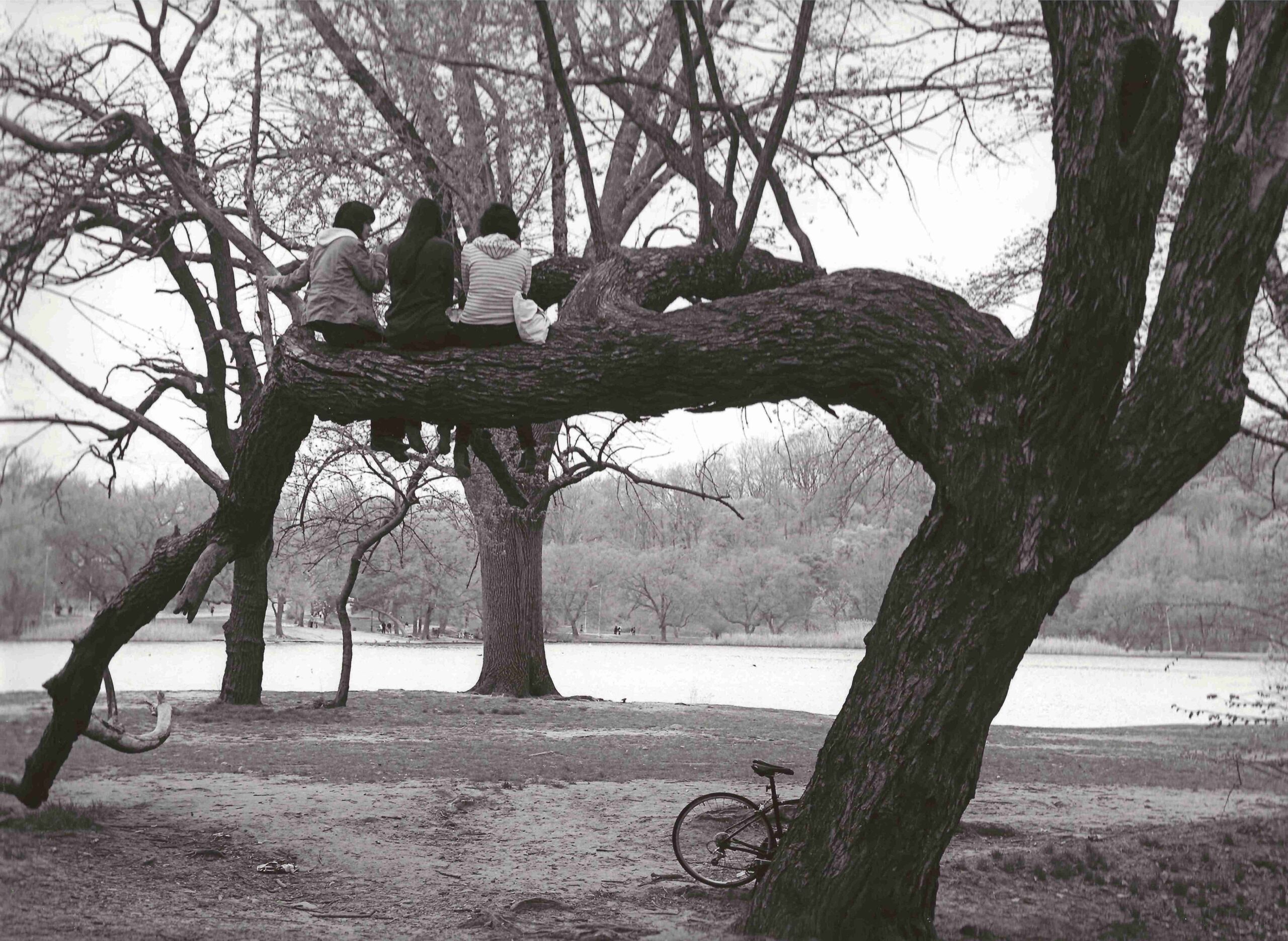
DD: Portrait photography is based on a relationship between the photographer and the person being photographed. How do you approach your subjects and create a connection that allows a deeper story to appear in the image?
“Building a relationship with my subject/subjects has been the cornerstone of my practice since first starting out. For me it is important to build trust. One of the strategies I used was to carry a small portfolio of images that reflect the folks that I want to photograph. Using this process helped them to better understand my vision and ability to make a captivating image. It was also my practice to always have business cards available and offer to give my subject a copy of the photo I took of them, at no cost.”
– Jamel Shabazz
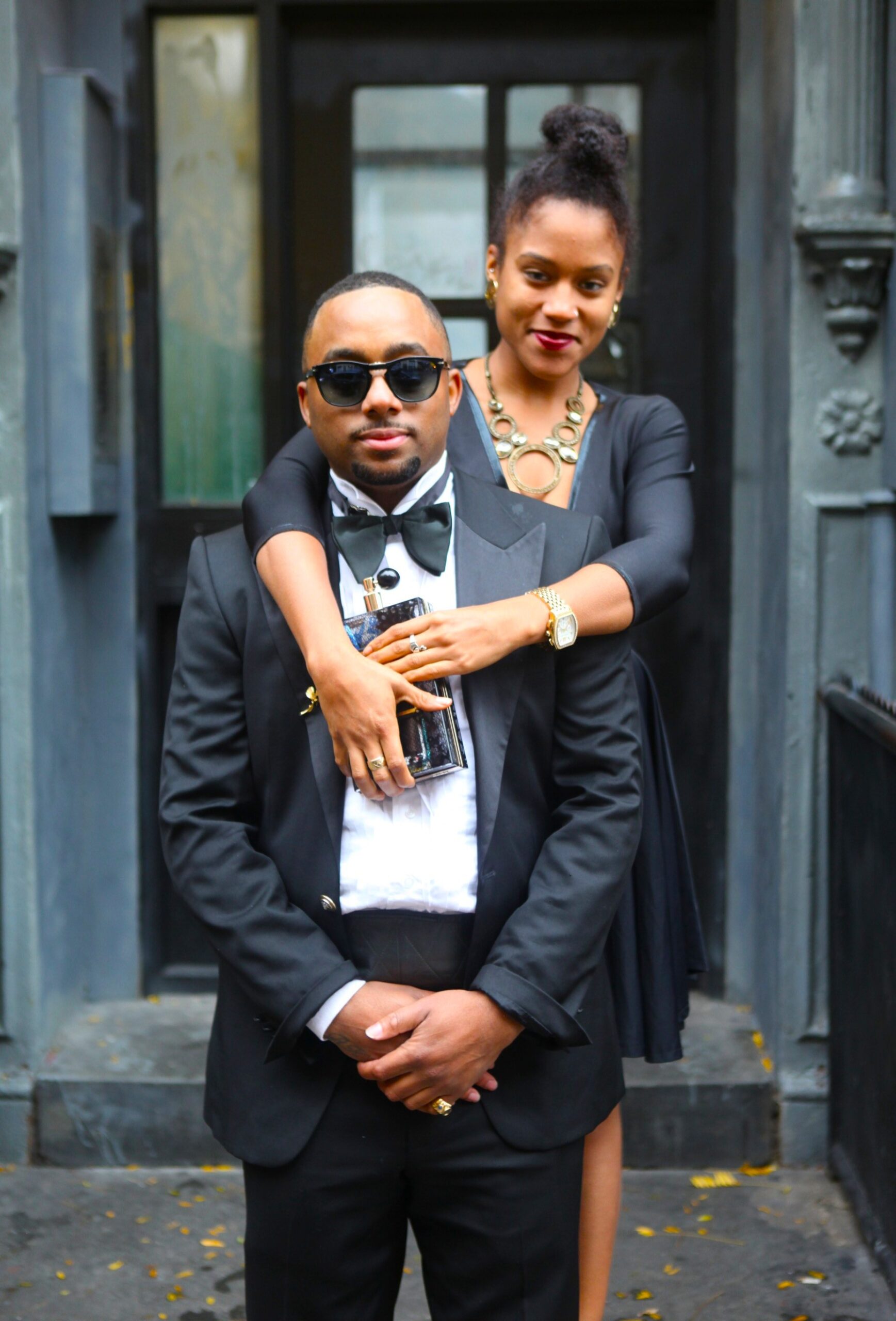
DD: Looking back at your photographic journey, is there a particular photograph, project or moment that changed the way you understand photography and your role as a photographer?
“My experience on Sept 11, 2001 in New York City was one of my darkest days. I witnessed death and destruction minutes after the second plane hit the World Trade Center. Working just a few blocks away, as I was starting to prepare for my shift, I heard about the first plane hitting the tower and immediately grabbed my camera and proceeded to the area. Getting within one block away, I was stopped by a police officer, so I stood in that area and started to photograph from that location. In real time, I was witnessing and documenting people jumping to their death. Moments later, I saw the second plane hit the towers. I recall a police officer yelling to us onlookers, ‘You better get out of here, or you are all are going to die!’ Thankfully I took his advice. I returned a couple of hours after both buildings collapsed, but this time as a first responder. Despite having my camera and plenty of film with me, I was conflicted and hesitated to really go in hard and document this horrific event, at least during the early hours. Later on that day, I made it to Ground Zero, where my number one priority was to help with the search and rescue effort. During moments of pause, I would raise my camera to a take a couple of important photos, to have a visual record of this tragic and historic day.”
– Jamel Shabazz
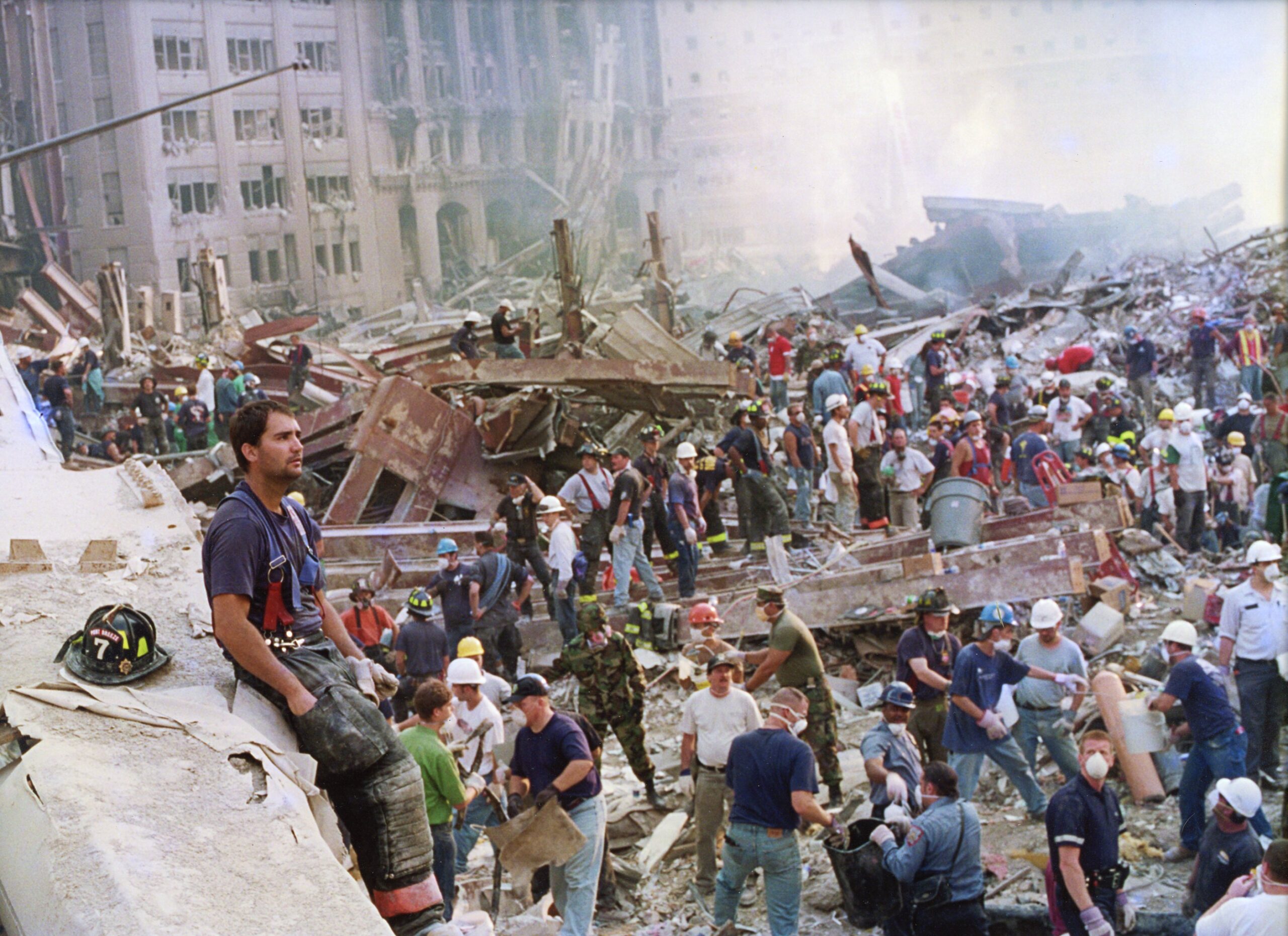
Interview with Jamel Shabazz
Photo Credits: Jamel Shabazz
Article & Interview by Daria Diemidova