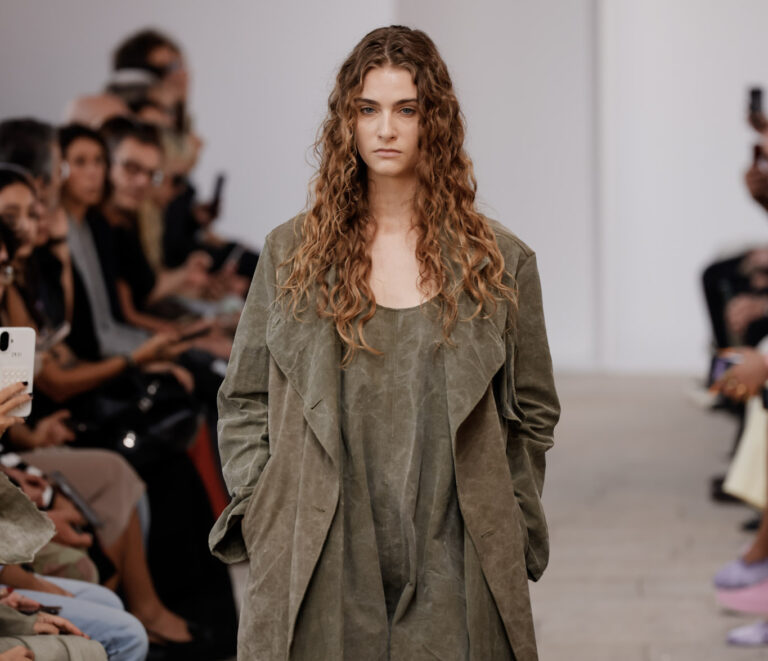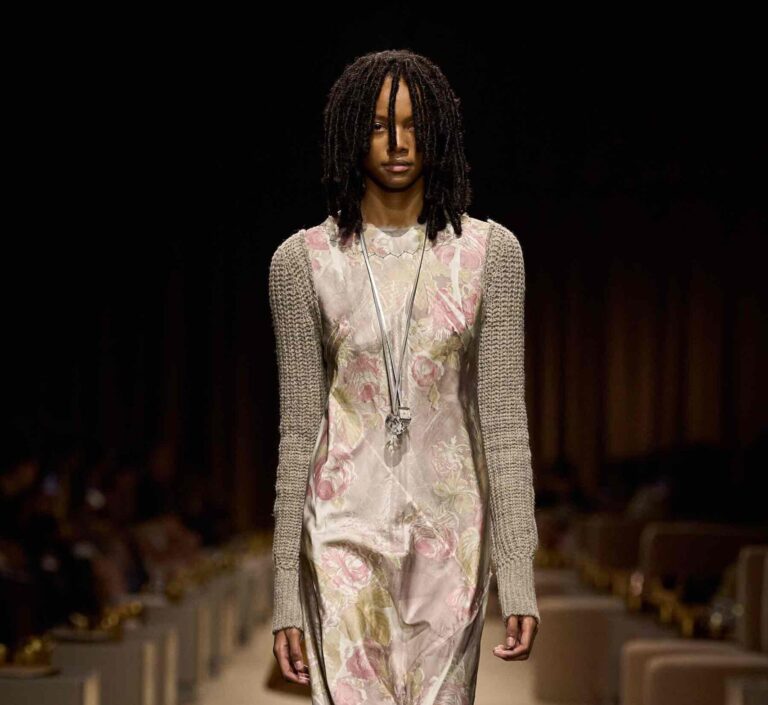
Inspired by the vision of a peaceful Italian lake in the midst of a storm – remarkably surrounded by waves and foam – Florania’s Spring/Summer 2027 collection draws on ‘eco-Gothic’, a subgenre of literature and critical approach that blends the dark atmospheres of Gothic fiction.
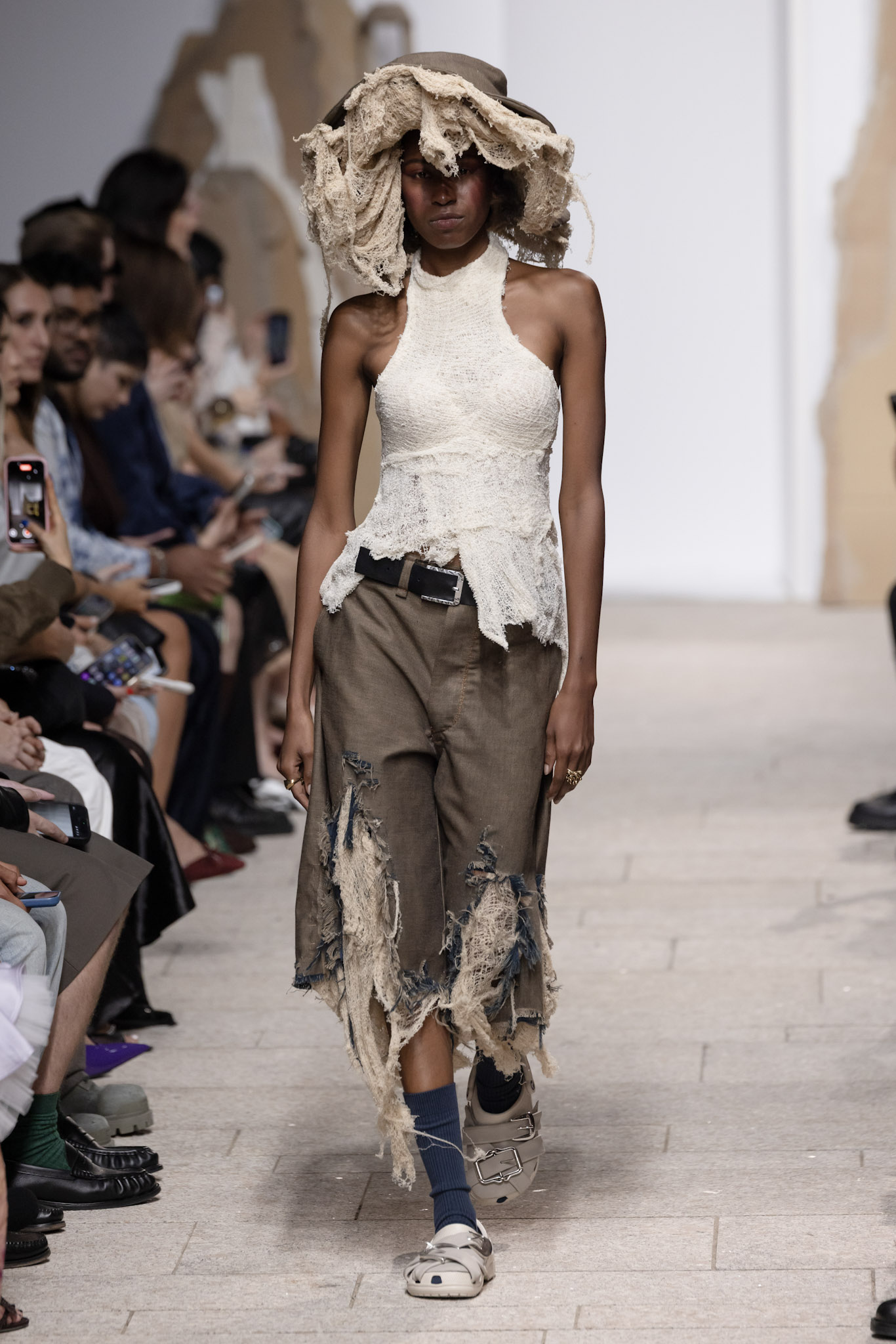
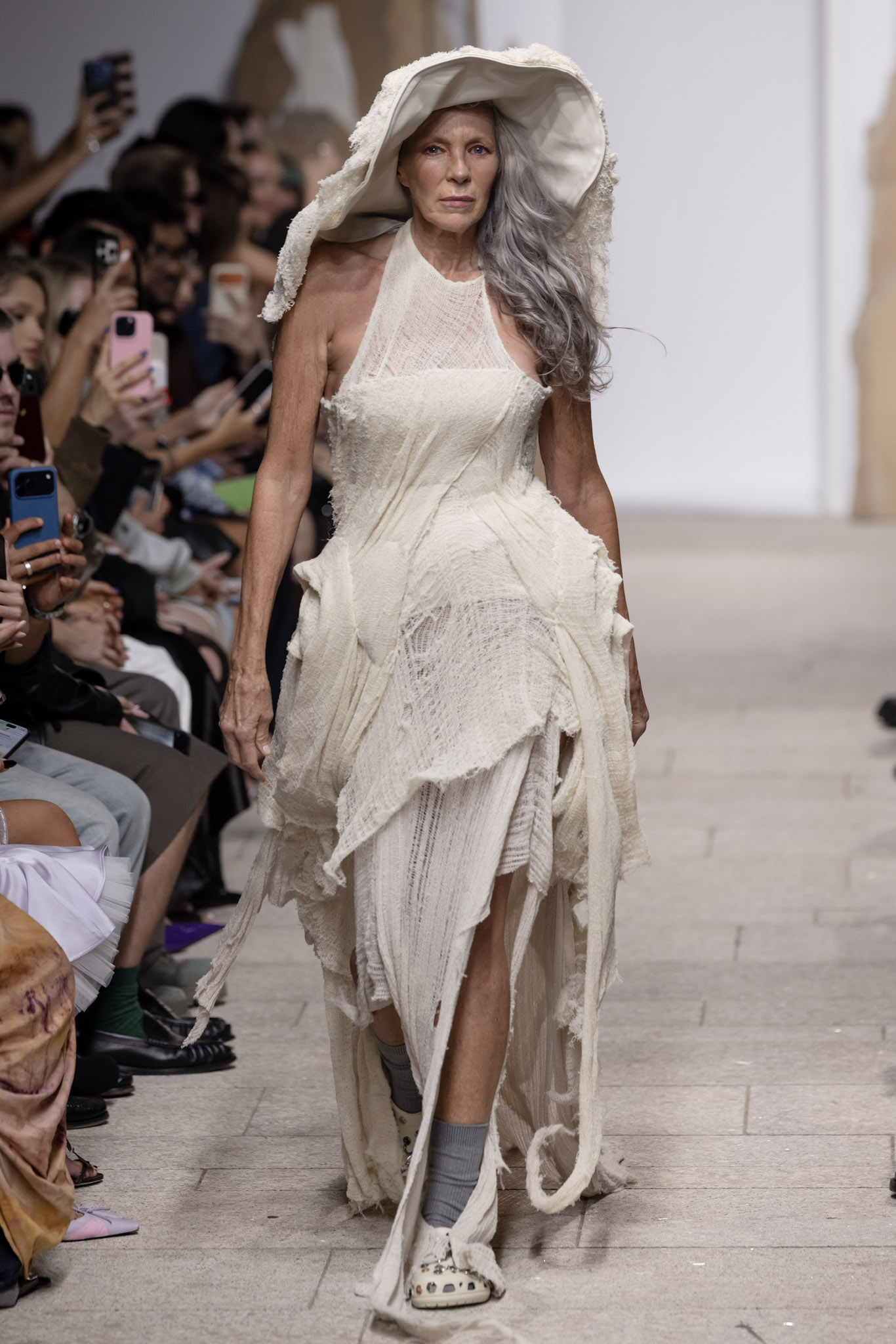
To emphasise the current dystopia in which the debate centres on AI consciousness whilst ignoring climate disasters, Florania asks how to capture the Romantic Sublime – nature in all its majesty and terror – and translate it back into human form.
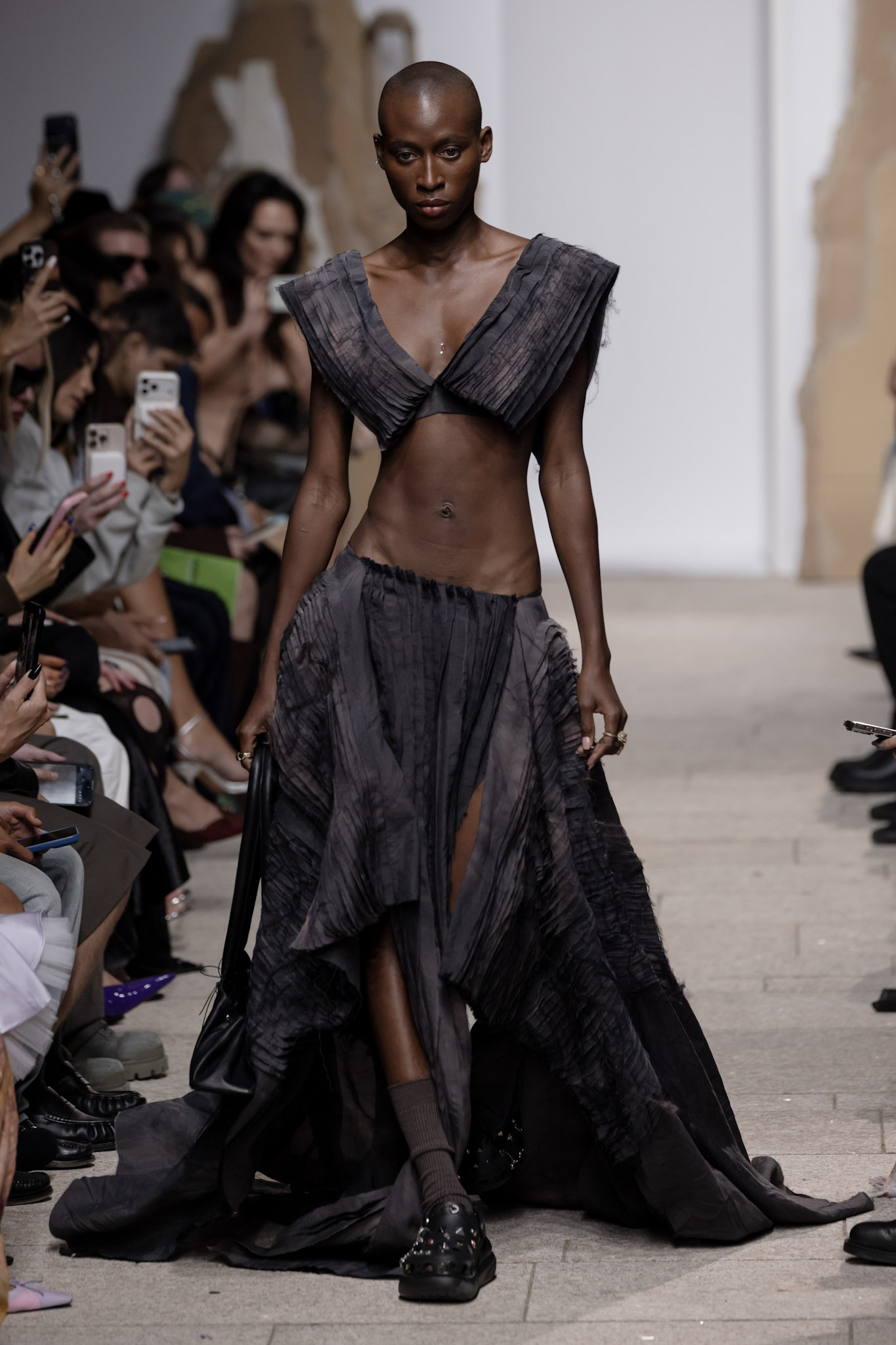
Here, the focus is on geology, and on mineral and botanical textures: stratifications, sediments, erosion, surfaces weathered by the elements, and their organic counterpart: flowers, tides and foam. Natural textures are recreated on the leather using an airbrush, which applies the colour as if it were a weathering agent or a form of erosion. The same approach is applied to the treatment of textiles, where the fabric is worked until it takes on the appearance of a crust or sediment.
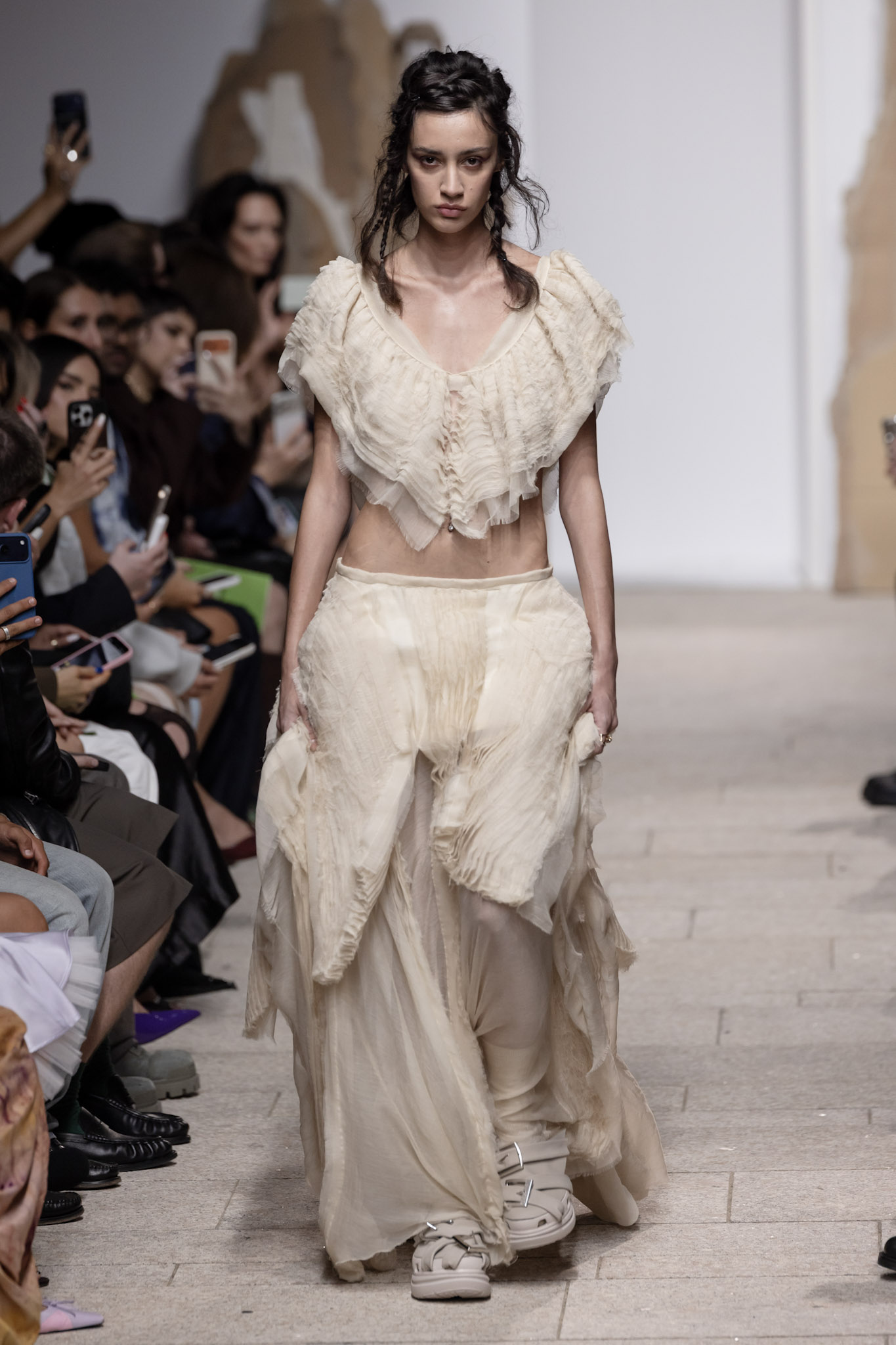
Knitwear, at the heart of Florania’s experimental techniques, evokes the idea of flowers and tides – ethereal elements among open structures, yarns that shrink and fray, hems that fray like seaweed or sea foam. Draped knits wrap around the body like ropes fished out of the water; layered silks create soft, unstable volumes. The result is garments that are mineral-like, dusty, corroded, or as light as foam; or, indeed, new skins that redefine the silhouette in an almost animal-like manner.
The colour palette is inspired by this eroded natural landscape: sand, bone and ecru are derived from stone and dust; ash greys and anthracite shades, soft as shadows, along with midnight blues and rock blacks, round off the mineral palette. The only saturated accent amidst them is cochineal coral: a colour derived from an invasive living organism.
What emerges from the collection – from the contours of the earth and the colours of the storm- tossed lake – is the visual experimentation of a figure living within the dystopian landscape of the present and the future. Despite being unable to resolve any critical issues, the collection highlights the Romantic Sublime to pose a question: if, through the power of the image we choose to project of ourselves via our clothes, could we convey social themes and projections more quickly than through our words?
This is the source of the optimism in this collection.
Source: Florania