Discipline and blossoming, gestures controlled by an ideaof uncompromising elegance, and the organic expansionof a flower that becomes sculpture. The starting point ofthe Genny F/W 26/27 collection comes from somethingfar away: fashion launched during the Directory (1795–1799) by Les Incroyables et les Merveilleuses. These werepeople so rigorous in their continuous pursuit of anabsolute image, full of rules to follow, that their style latergave birth to dandyism
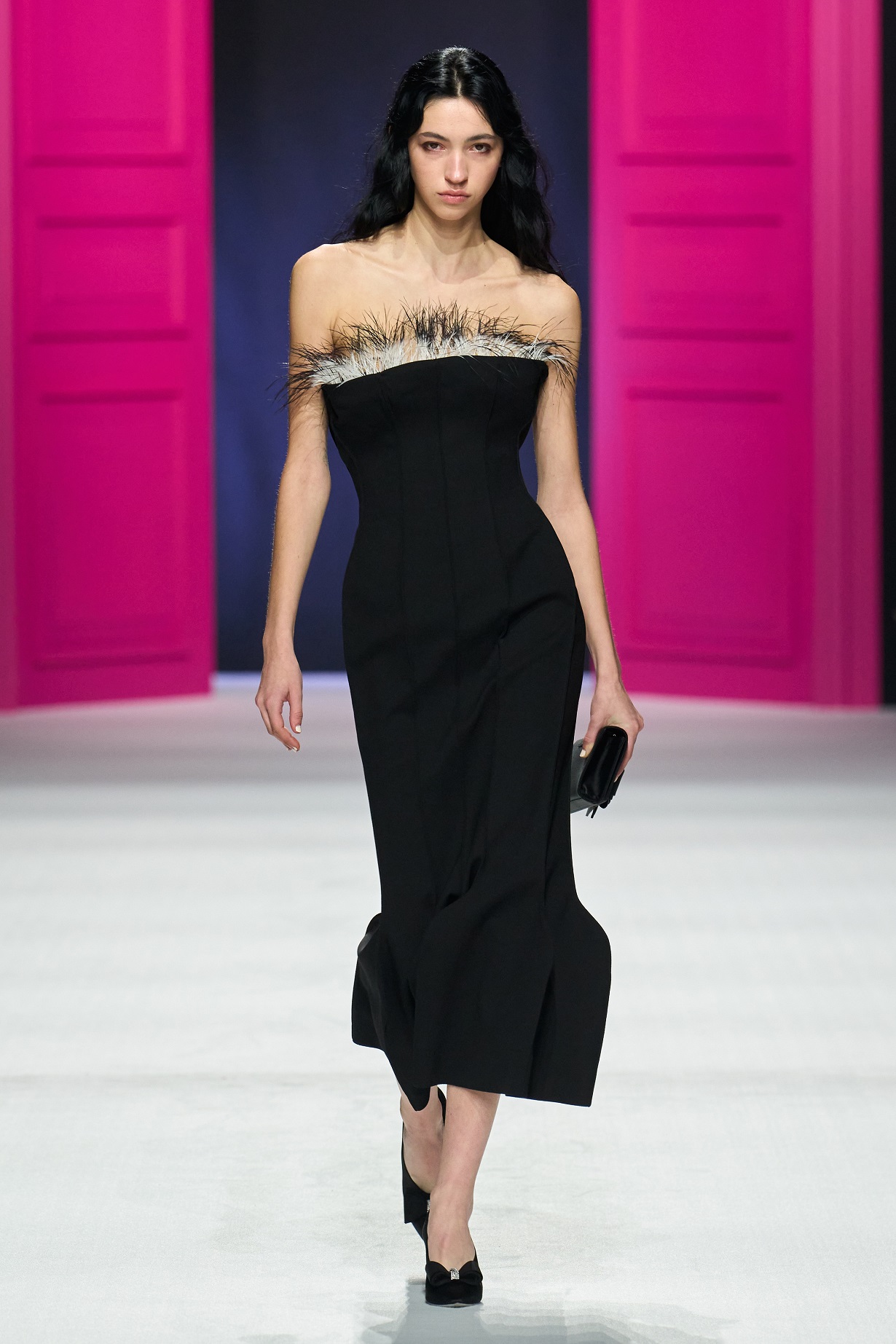
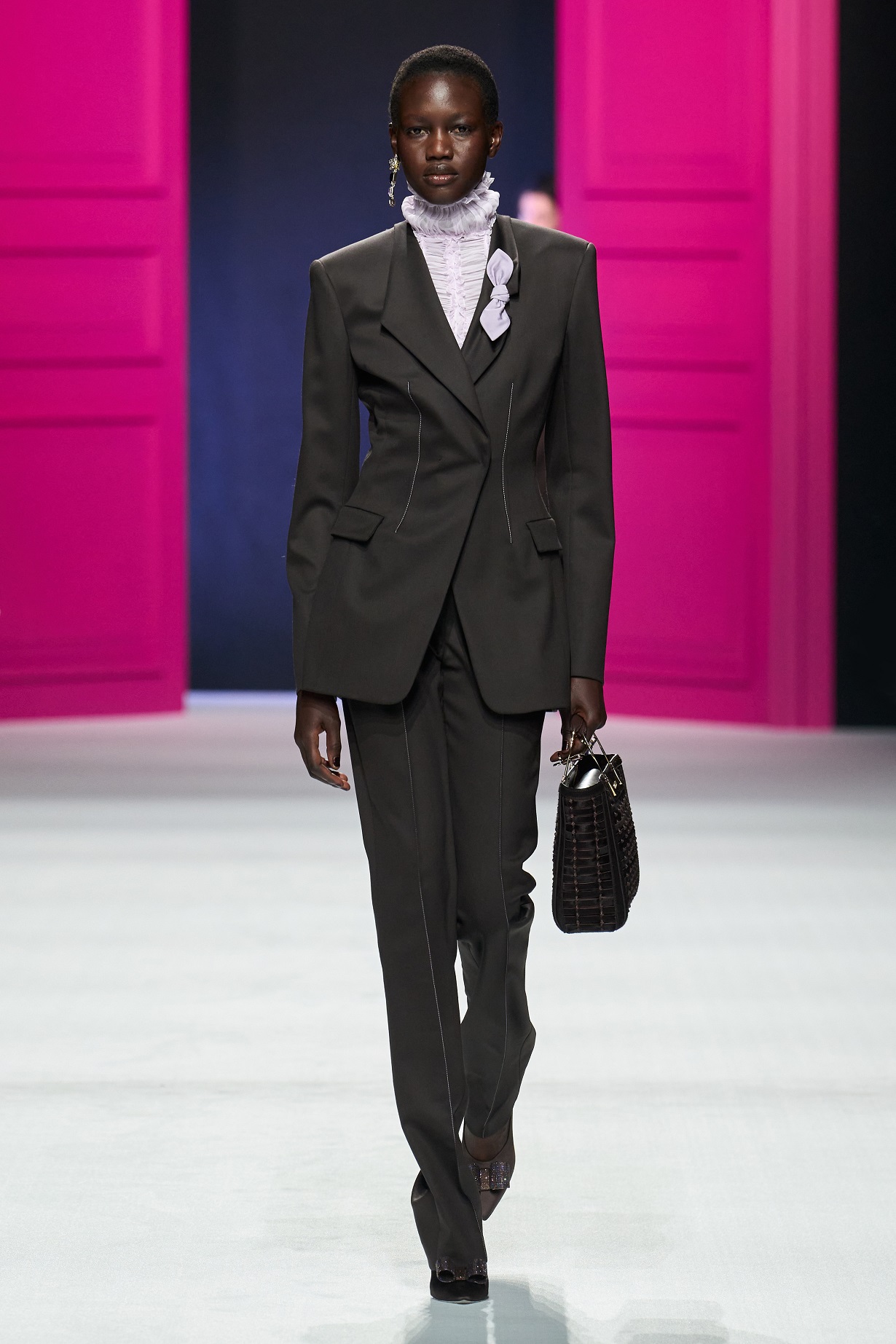
The masculine wardrobe—sharp blazers, structuredwaistcoats, impeccable trousers, and high-collaredshirts—is reinterpreted on the female body with almostarchitectural precision. The silhouette is vertical, composed,measured. But discipline is never sterile: from the center ofthe sartorial construction, the flower emerges. It is neitherprinted nor decorative, but sculptural and monumental. Three-dimensional petals transform into corolla skirtswith volumes that open like botanical architectures. Thebodice remains sleek and controlled, while the lower partexplodes into the variable geometry of nature.
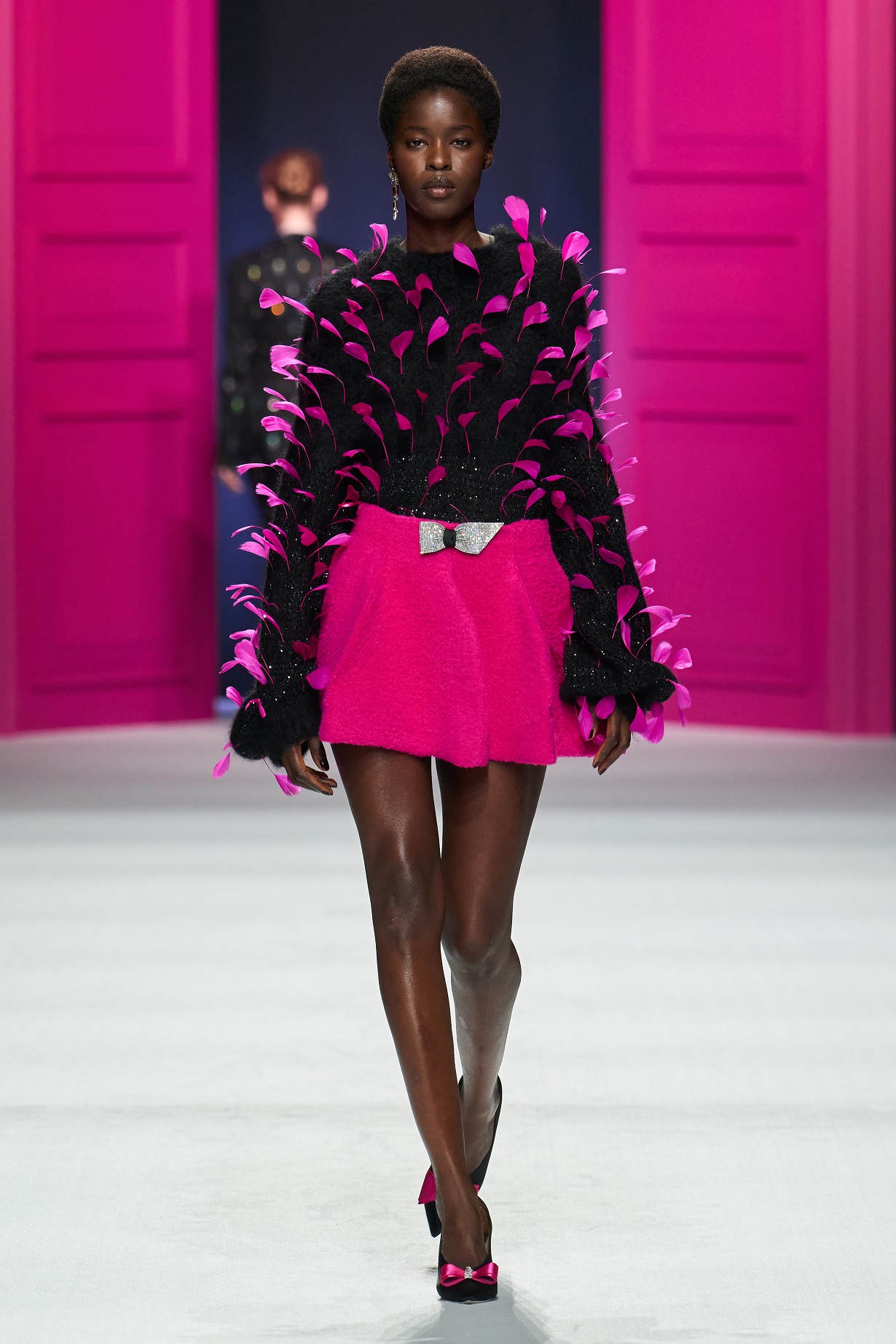
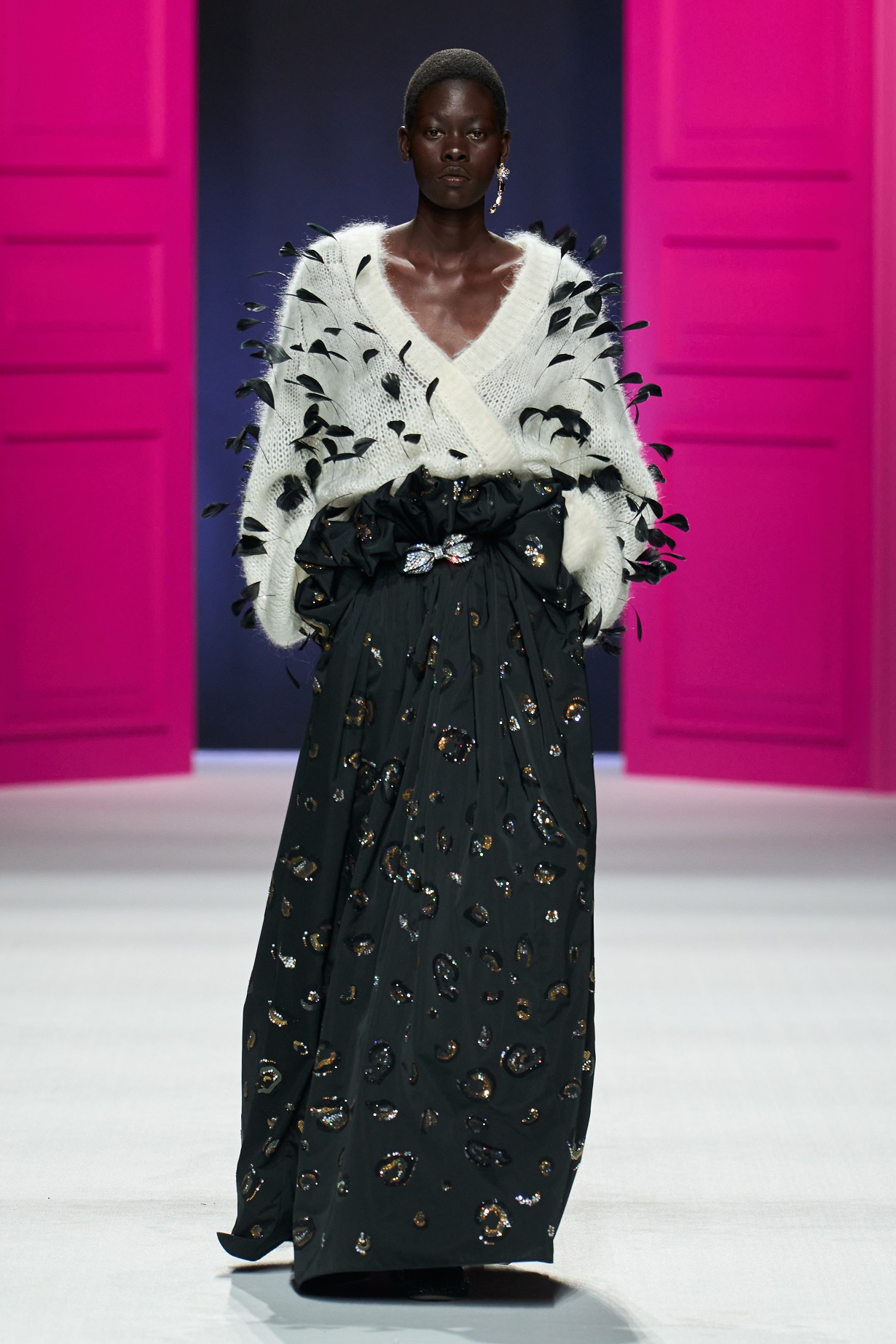
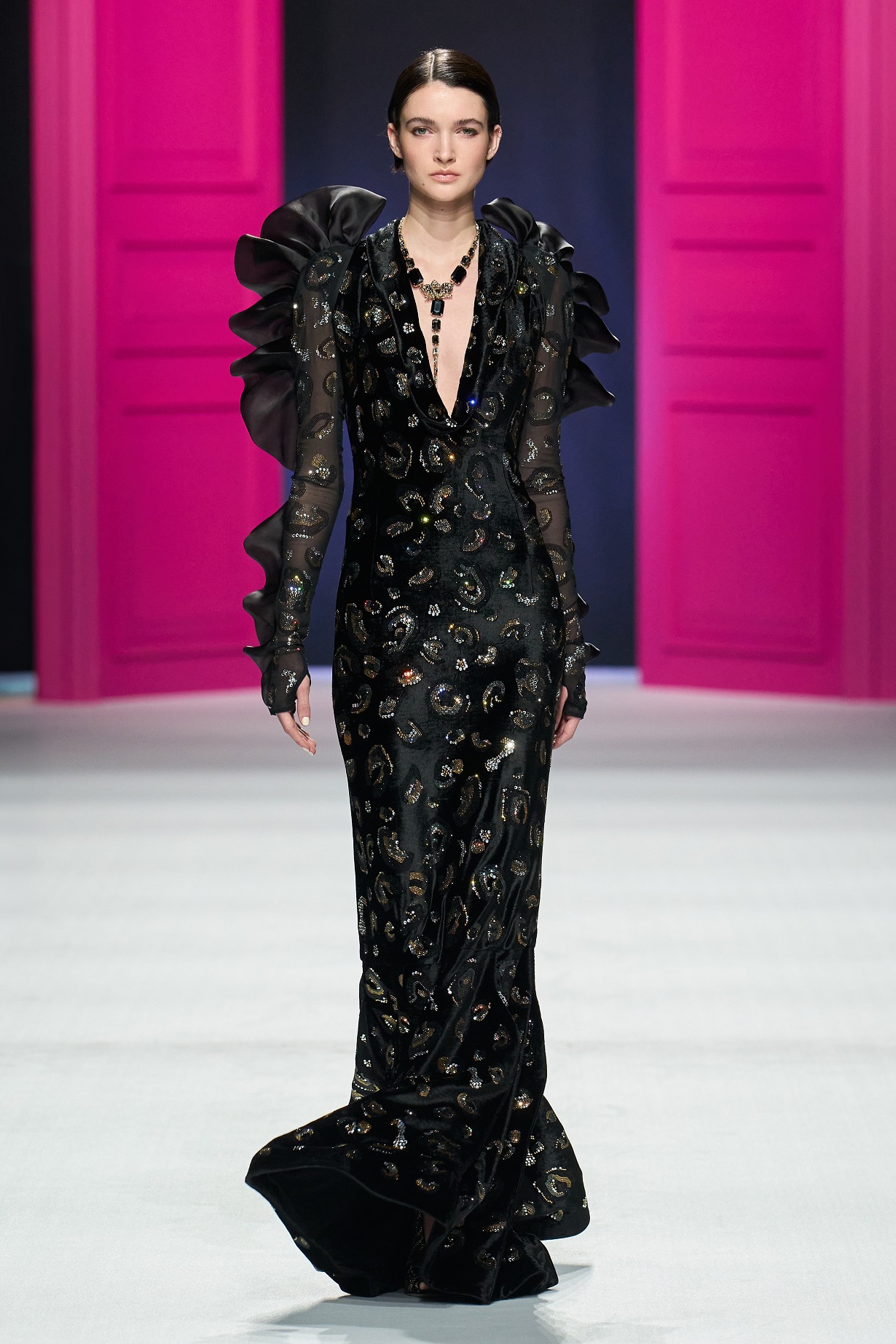
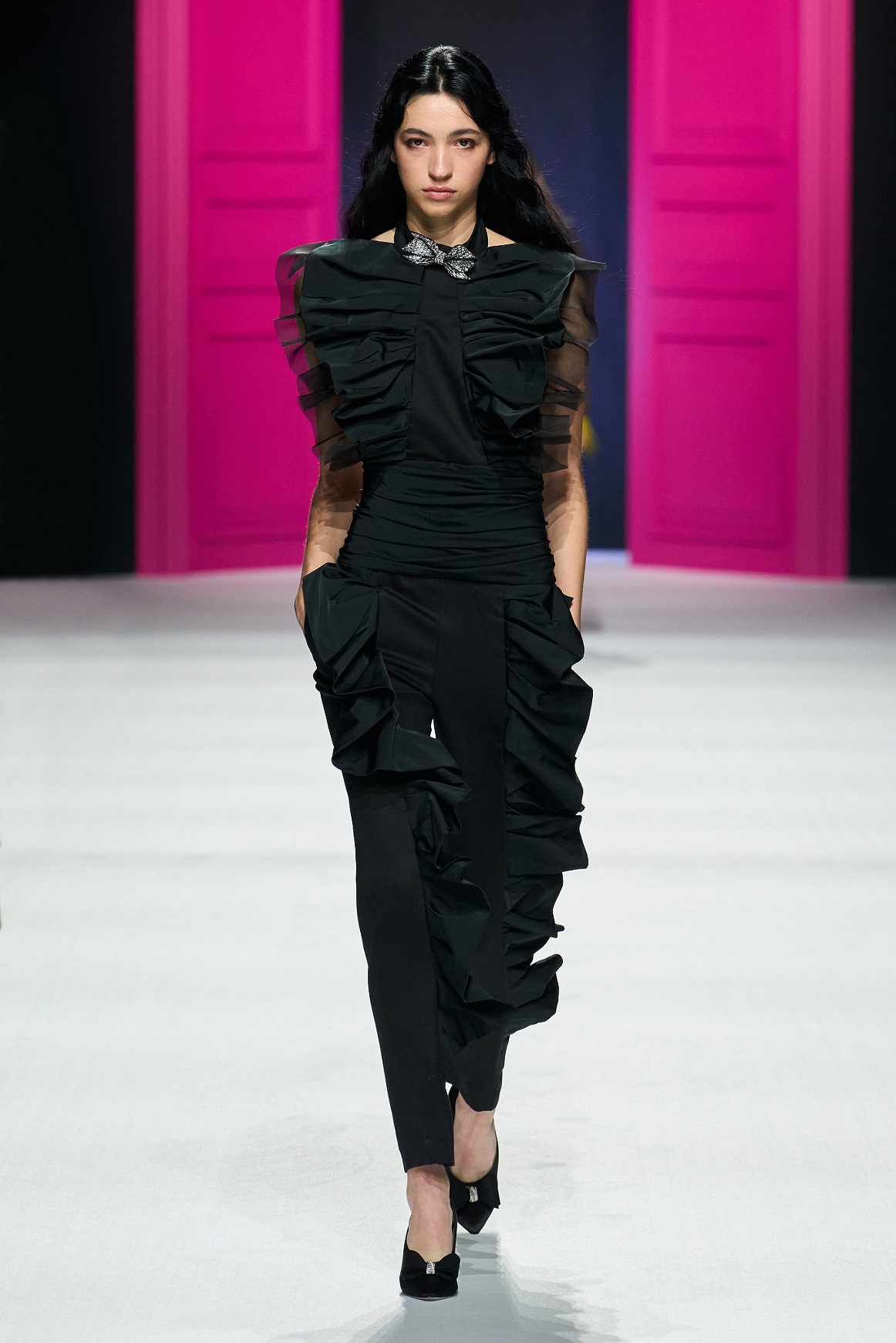
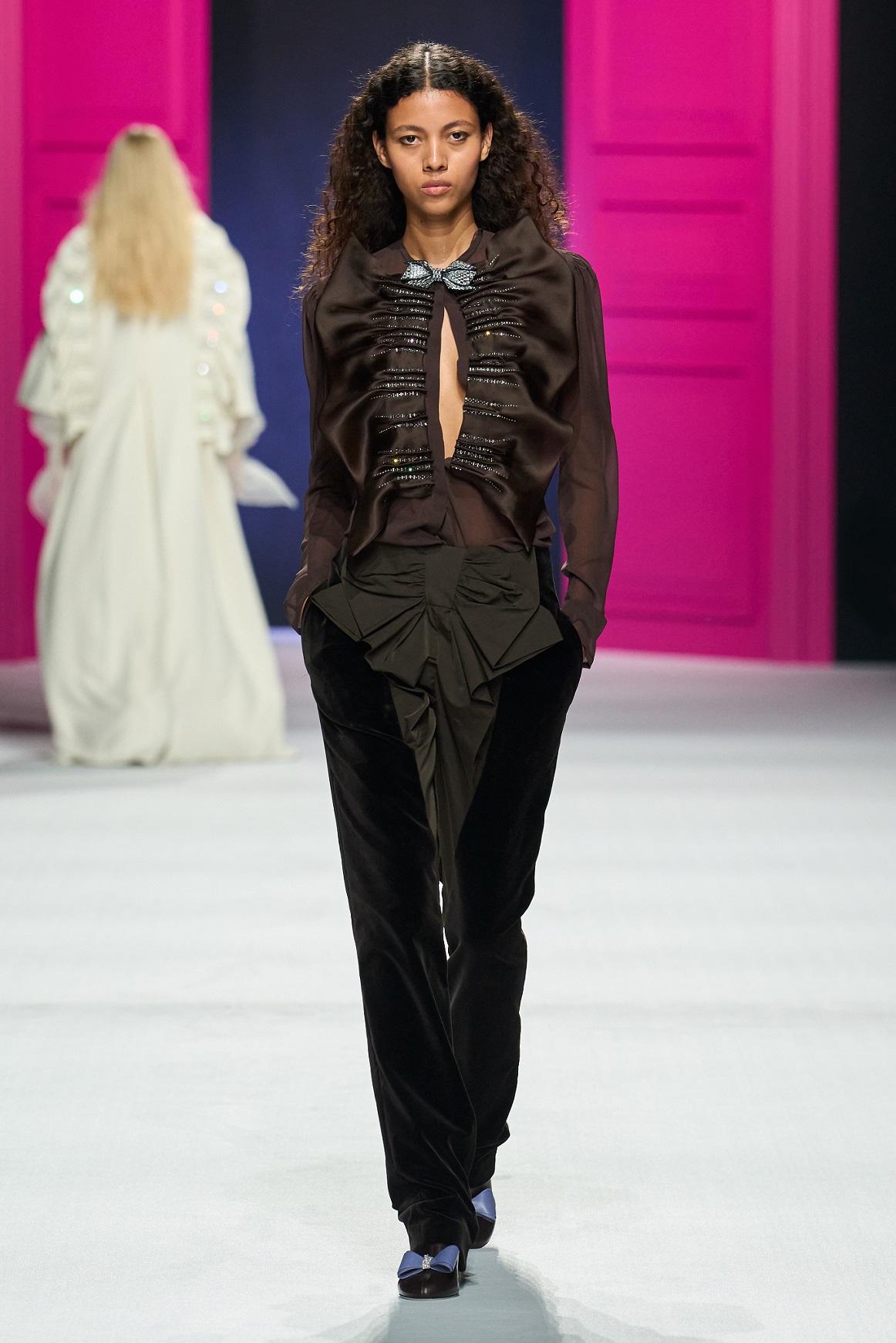
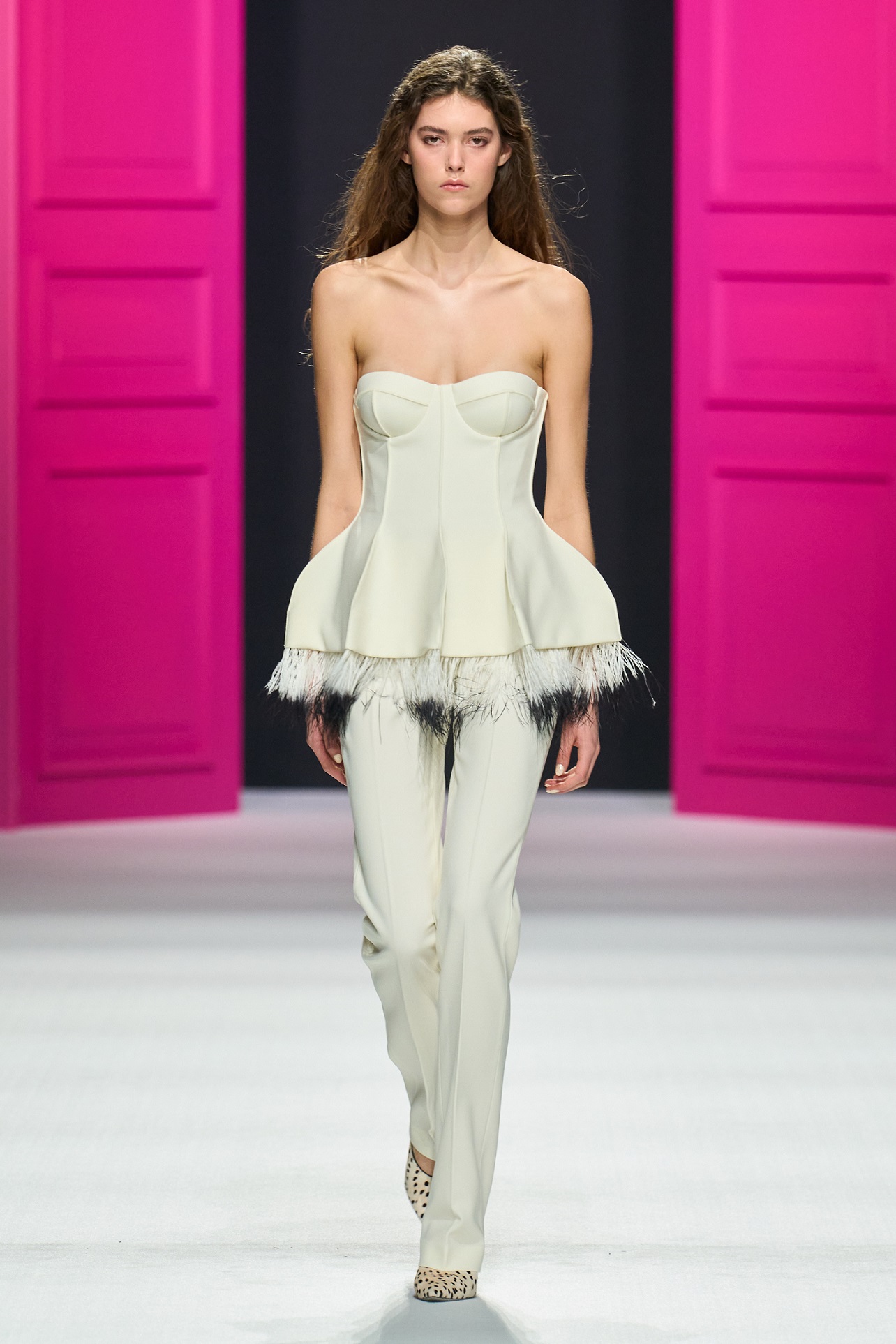
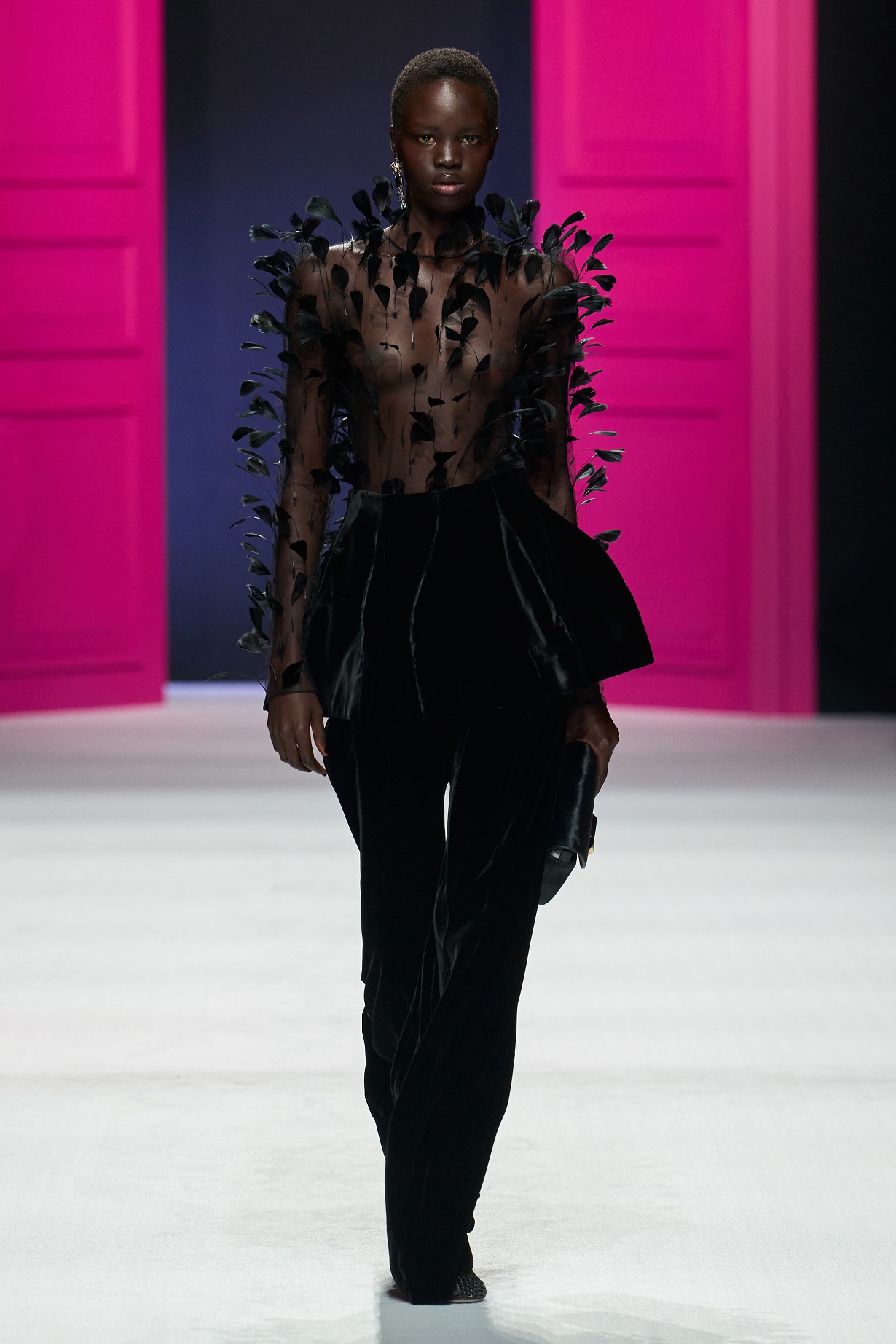
There are bows and ruffles. The bows are transformedinto tailored details that replace the fastening of a sensual,masculine-cut white shirt, or they adorn the lapels of arefined tuxedo jacket. Ruffles, on the other hand, replacethe lapels of a perfectly elongated jacket over the hips andtrace the contours of a sensual cigarette-pant jumpsuit. Feathers are not nostalgic ornamentation but livingmaterial: they rest on structured tops and envelop coatswith theatrical lightness, creating movement that contrastswith the rigidity of tailoring. They are accents of air withinthe construction.
Regarding the color palette, black remains the foundation,while ivory breathes beside it. Then come vibrant fuchsia,dusty lilac, and pale yellow, like pigments taken from anabstract garden. Animal prints—already present as aninstinctive echo—now dissolve into subtle tones, almostnatural shadows that traverse the fabrics without everbecoming aggressive.
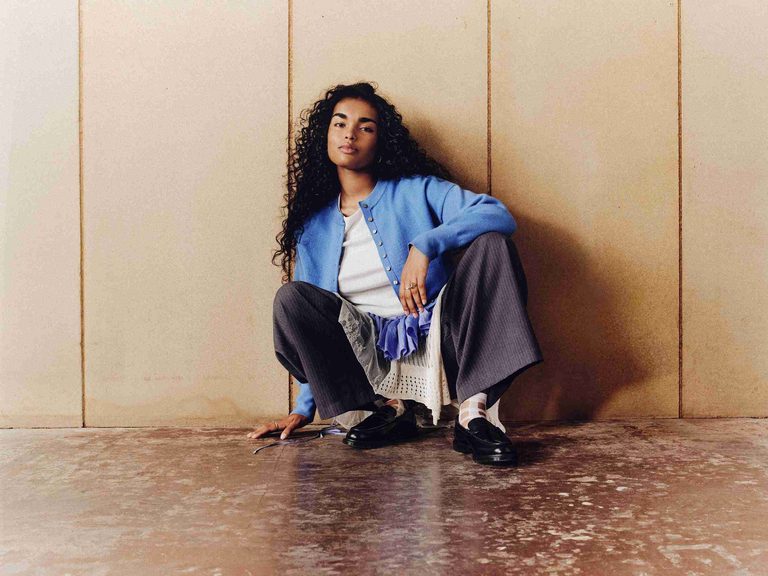
Large bows applied like pins on shirts and dresses serve asgraphic elements to interrupt the linearity of masculinesuits. On the bow, rigor bends and becomes consciouslyaesthetic. The models wear slippers and loafers, subtractingformality from the look. The contrast is intentional: sartorial architecture on top, relaxed step below. It’s astyle that asks no permission and doesn’t need heels toassert itself. A woman who enters with the composure of agentleman and expands like a flower sculpture.
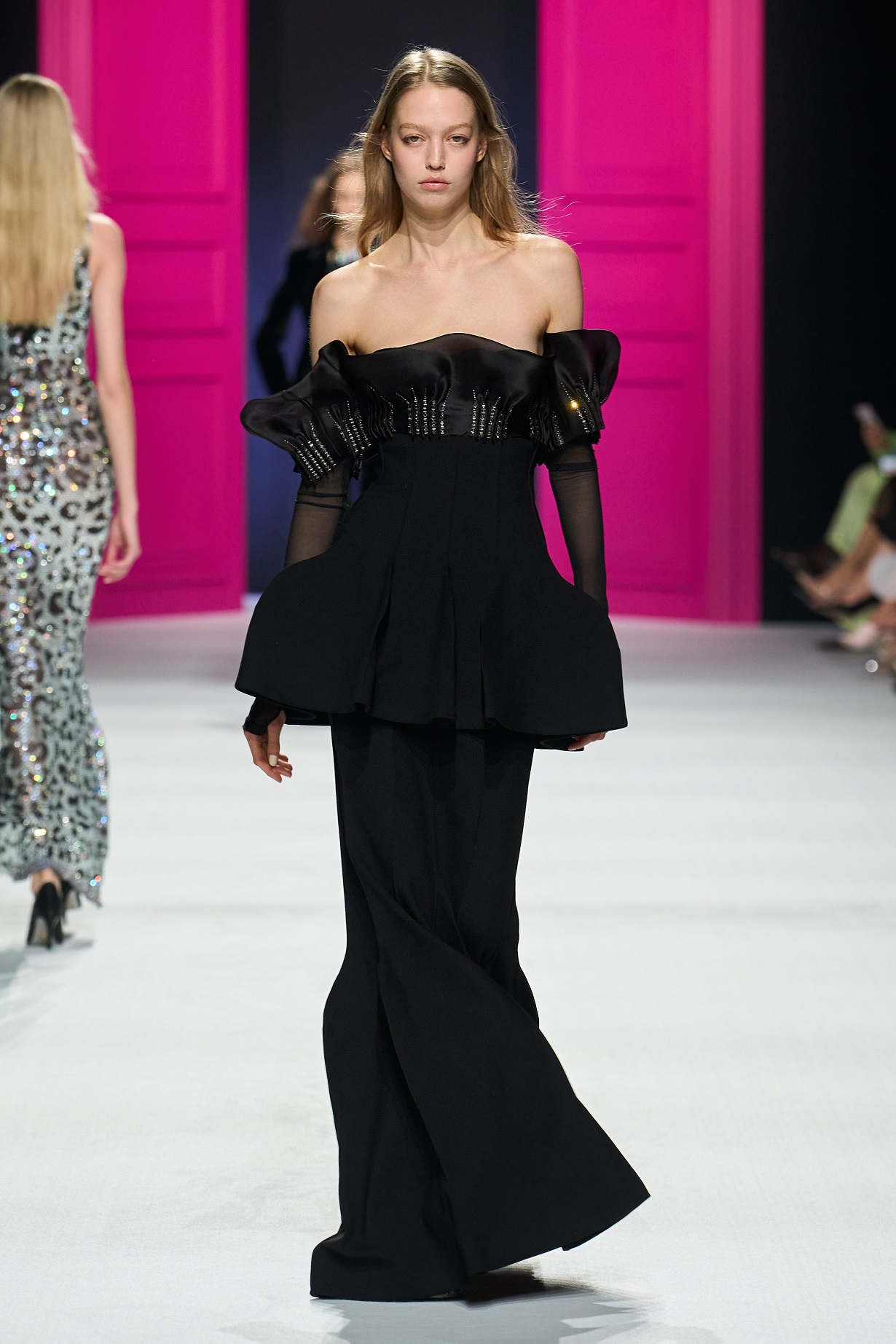
Source: Genny